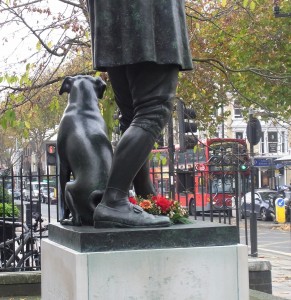
 Today would have been William Hogarth’s 314th birthday. The Trust’s traditional flowers were placed at the feet of the Chiswick High Road statue and because Hogarth’s House has just re-opened there were small modern fairy cakes or pieces of traditional madeira cake for visitors this afternoon.
This has been a momentous week with the re-opening of the House after such a long time.
There was a queue on the first day, 8 November, and visitors have been pouring in. We hope Mr Hogarth would have been pleased!
And there was a piece to mark the birthday by Hannah Renier on the London Historians website, concering Leicester Square and Hogarth.
The second anniversary of the fire at Hogarth’s House passed in August 2011 – and by that date the House was one again looking extremely beautiful. The damaged panelling and stairs have been reinstated exactly as before and the interior cleaned and redecorated.
 The damage wrought by the fire brought a few opportunities for improvements. For example, the ugly salmon pink fitted carpets laid in 1997 were burnt in places and damaged falling ceiling plaster, scorched-off paint, melted light fittings and alarms and the fire brigade’s water, and had to be removed. Wide oak floor boards were uncovered in two areas and have been carefully cleaned and left visible. Elsewhere modern carpet has been laid for visitors’ comfort. The need to rewire most of the building after the fire has made possible the replacement of old and bulky track lighting with more modest fittings and in one room there are now recessed downlighters.
The new colour scheme was selected from colours found through a careful paint analysis by Richard Ireland – soft greys on the ground and first floors and a pinkish grey in the new second floor study room. One set of shutters in the 1750-51 extension has been made to unfold and close again and shows the early 19th century pinkish tone under the cobwebs. Work is in progress to fit out the rooms with a small number of elegant new display panels, small showcases and furnishings ready for re-opening to visitors in November shortly before Hogarth’s 314th birthday.
Over several summers before the House closed members of the Trust contributed events and displays which brought in new visitors. We asked them to tell us what would make a visit more enjoyable – most people found viewing room after room of Hogarth’s prints hard work and what they really wanted to know was who lived there and how the rooms were used. This has helped in planning the new presentation of the House. There will still be some of Hogarth’s famous prints on the walls, but there will also be large copies with notes which you can sit and study in comfort.

Hogarth carried his paint colours in this little cabinet (Aberdeen Art Gallery ag000103)
The new displays will include personal items from the Hogarth family which are coming on loan from other museum collections – when the House was last refurbished we were not aware of their existence. These include a little portable chest in which Hogarth kept his colours, his palette, his punchbowl and a mourning ring commemorating his wife, Jane. Visitors will also discover more about the ladies of the Hogarth household – not only Jane but her mother, Lady Thornhill, her cousin, Mary Lewis (to whom she left the House), Hogarth’s sister, Anne and family friend, Julian Bere, a wealthy spinster – who all lived together in Leicester Fields and in this house in Chiswick.
In addition, new research has made it possible to create some displays which tell the story of others who lived there, both before and after the Hogarths, and who had previously been ignored. They have turned out to be interesting in their own right and help provide a more complete story of the House.

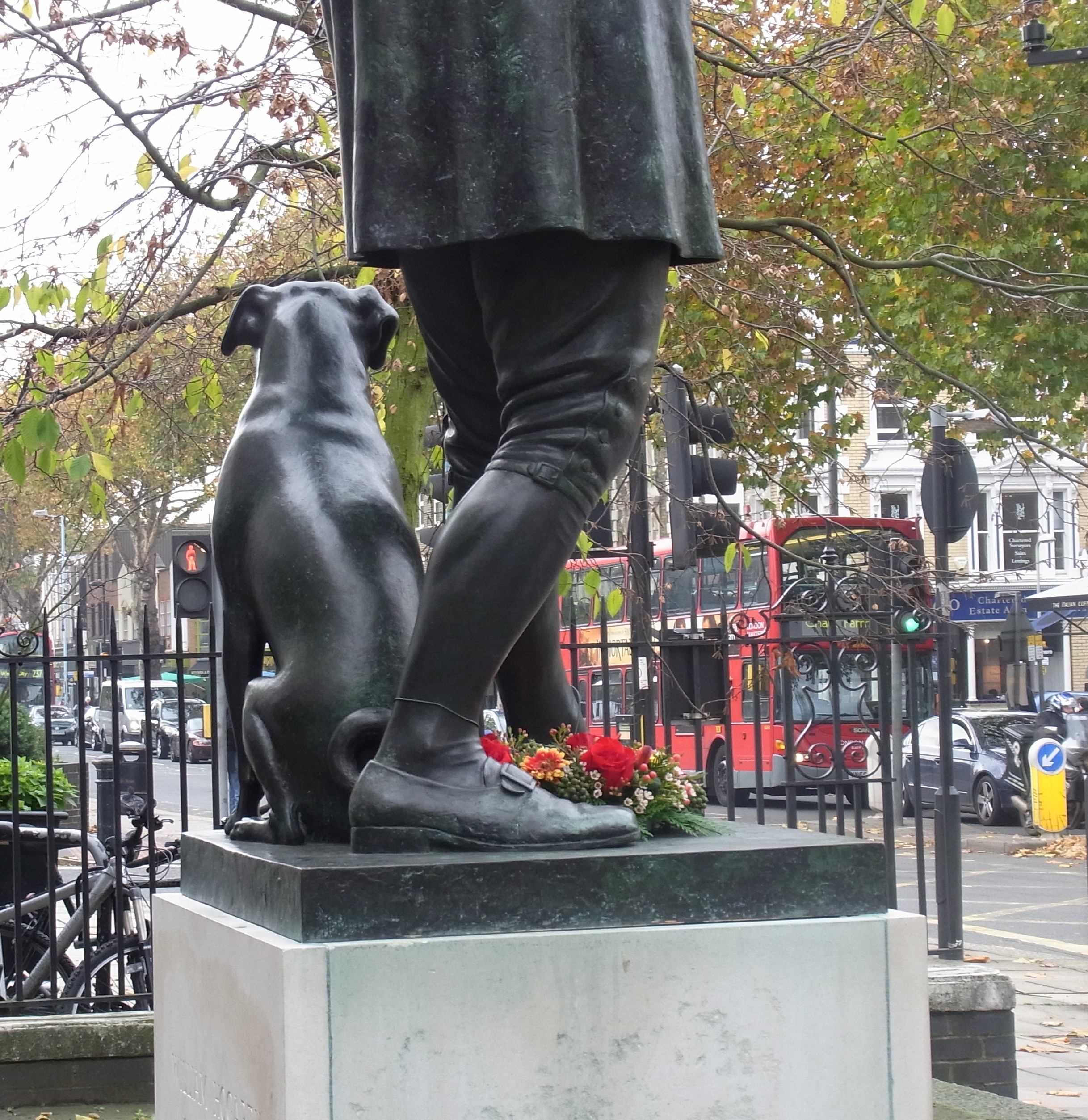 Today would have been William Hogarth’s 314th birthday. The Trust’s traditional flowers were placed at the feet of the Chiswick High Road statue and because Hogarth’s House has just re-opened there were small modern fairy cakes or pieces of traditional madeira cake for visitors this afternoon.
